All 12 AWS Certifications: 5 Strategies to Pass in a Year
Preparing for all 12 AWS certifications within a year involves five strategies: a study plan, AWS resources and documentation, hands-on practice, community discussions, and mock exams. Set daily study hours and topic timelines, then use mock exam feedback to identify and improve weak areas.
Summary written with AI from this article, and checked against it.

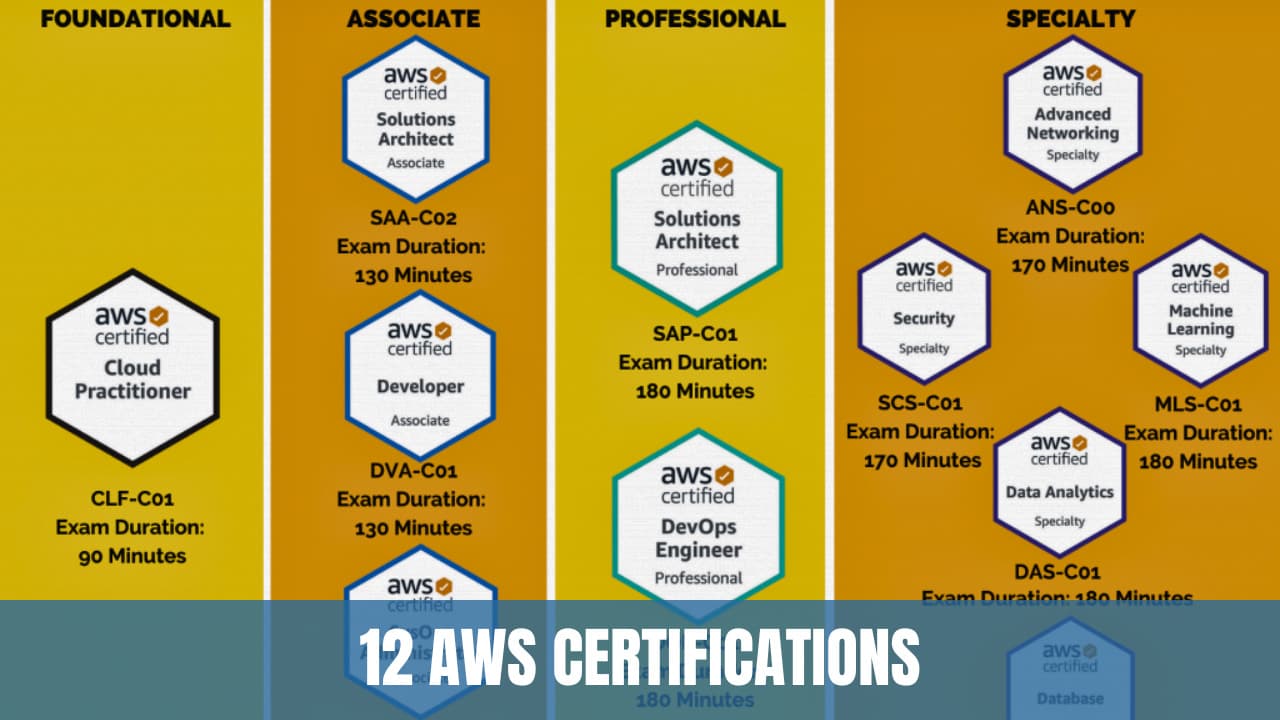
Navigating the journey to secure all 12 AWS (Amazon Web Services) certifications within a year can be a daunting task. The certifications, ranging from foundational to specialized levels, require meticulous preparation and a strategic approach. In this detailed guide, we elucidate the top 5 strategies that were effectively employed to conquer all 12 AWS certifications within a tight timeframe of one year. Let's delve into each strategy, explaining why they are beneficial and how you can implement them in your preparation.
1. Developing a Comprehensive Study Plan
A comprehensive study plan stands as the cornerstone of successful preparation. It involves setting clear goals, timelines, and dedicating specific hours daily to cover different topics and domains comprehensively.
Real-World Application:
A well-structured study plan, with specified hours for each topic, can be mirrored to project management scenarios in the corporate world, where timelines and systematic approaches are key to success.
2. Leveraging AWS Resources and Documentation
AWS offers a wealth of resources and documentation that are indispensable for mastering the necessary skills. Utilizing these resources can provide a deep understanding of the AWS ecosystem and its services.
Real-World Application:
Many professionals in the cloud computing sector regularly turn to AWS resources and documentation for insights and guidance, showcasing the real-world relevance of these materials in day-to-day operations.
3. Engaging in Hands-on Practice
Hands-on practice is vital in cementing the knowledge acquired during the study. It involves working with AWS services practically, thus enhancing understanding and retention of concepts.
Real-World Application:
In the industry, professionals often rely on hands-on experience to solve complex problems and implement solutions, indicating the critical role of practical experience in achieving proficiency.
4. Participating in Community Discussions and Forums
Community discussions and forums serve as platforms where individuals can interact with peers and experts to gain insights, clarify doubts, and stay updated with the latest trends and developments.
Real-World Application:
Community engagements are common in the tech industry, where professionals collaborate to innovate and find solutions to pressing challenges, thus exemplifying the value of community interactions in fostering learning and development.
5. Taking Mock Exams and Utilizing Feedback
Mock exams play a crucial role in the preparation process. These exams help to gauge the readiness for the actual exams and offer a platform to receive feedback and improve upon weaknesses.
Real-World Application:
In various sectors, simulation exercises and feedback mechanisms are utilized to enhance performance and readiness for actual tasks, showcasing the importance of mock assessments in professional development.
Conclusion
Achieving all 12 AWS certifications within a year is indeed a remarkable feat. By employing the above strategies, aspirants can navigate the rigorous path of preparation with a well-defined blueprint. These strategies not only guide you in mastering the AWS ecosystem but also offer a glimpse into the real-world applications of the skills acquired during the preparation journey.
Remember, perseverance and strategic planning are the keystones of success in this endeavor. Equip yourself with these strategies to pave the way for a successful and fulfilling journey in the AWS certification landscape.
Interview flashcards
How would you structure a study plan for AWS certifications?
I would set clear goals and timelines, then dedicate specific hours each day to different topics and domains. This creates a systematic approach to covering the material comprehensively.
How can AWS resources and documentation support your certification preparation?
AWS resources and documentation provide a deep understanding of the AWS ecosystem and its services. They also offer insights and guidance that professionals use in day-to-day cloud operations.
Why is hands-on practice important when preparing for AWS certifications?
Hands-on practice strengthens understanding and retention by putting knowledge to use with AWS services. Practical experience also helps professionals solve complex problems and implement solutions.
How can community discussions and forums help you prepare for AWS certifications?
Community discussions and forums let you learn from peers and experts, clarify doubts, and stay updated on trends and developments. These interactions support learning through collaboration.
How would you use mock exams and feedback in AWS certification preparation?
I would use mock exams to gauge readiness for the actual exams and use the feedback to improve weaknesses. This helps strengthen performance and readiness before taking the exams.
Written with AI from this article, and checked against it.

About the author
Vishal · Software & security engineerVishal writes Trickyworld's tutorials and interview-preparation guides on programming, databases, cyber security and AI. Vishal has been shipping production software long enough to have firm opinions about Python, PHP, Node.js, and JavaScript, and to have been wrong about each of them at least once. The work has run the whole stack: Drupal and Laravel applications, React front ends, MySQL and MongoDB underneath, Redis and Memcached for the things that had to be fast, Apache Solr for the things that had to be findable. That last part turned out to matter more than anyone expected. Tune a Solr index for a season, then watch a language model confidently retrieve the wrong document, and you recognise an old problem wearing new clothes. Most of what is hard about AI systems is not the model. It is retrieval, caching, latency budgets, and deciding what the system does when the answer comes back wrong — which is work he has been doing since well before anyone called it AI engineering. He plays a lot of games, which is less a hobby disclosure than an admission of where a good share of his engineering instinct came from. Real-time systems with a frame budget. State that has to stay coherent while a player does something no designer anticipated. The permanent question of what happens when the frame cannot finish in time. Those habits carry over more directly than they have any right to. He has written several books on programming, all built on the same conviction: most technical writing is unclear because the author never decided what to leave out. More from Vishal → · Editorial policy