Rilide Malware Adapts to Chrome Extension Manifest V3
Rilide Data Theft Malware has been modified to bypass security measures in Google Chrome's Extension Manifest V3 and steal browser data. It can log keystrokes, capture screenshots and exfiltrate sensitive information; recommended precautions include auditing extensions, removing unfamiliar ones, keeping the browser updated and training staff.
Summary written with AI from this article, and checked against it.

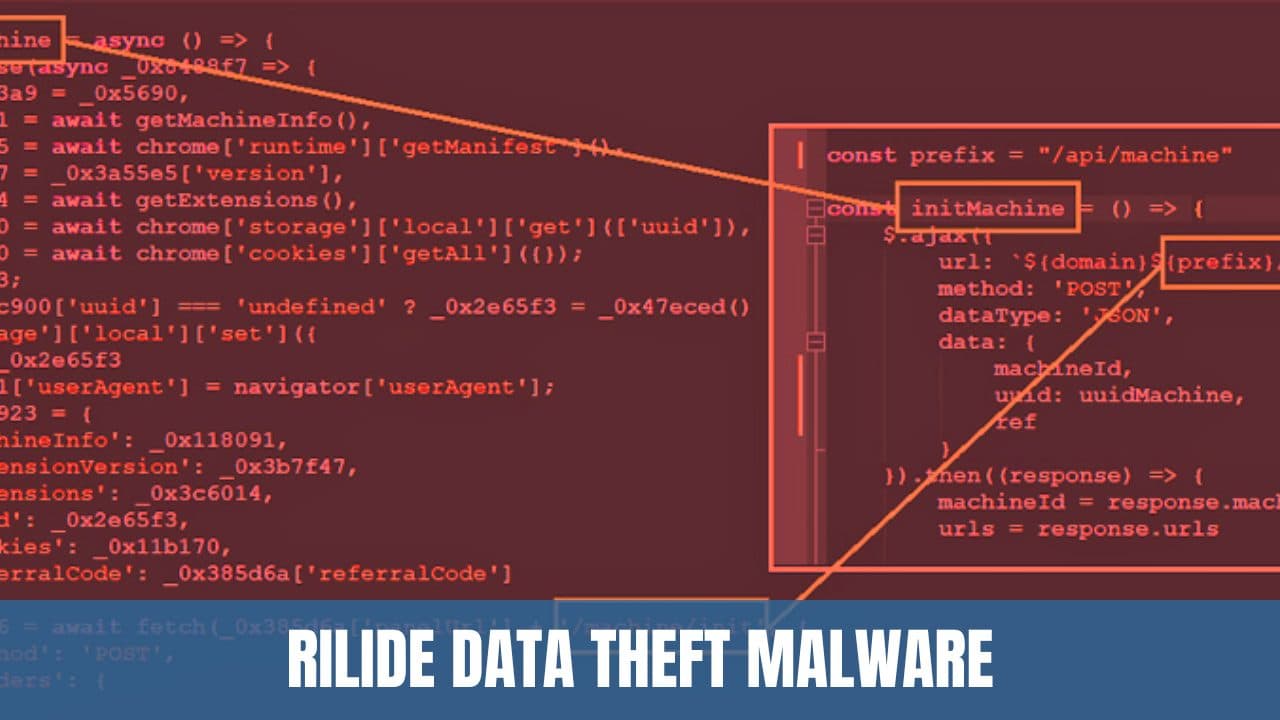
Cybersecurity is an ever-evolving field, and the Rilide Data Theft Malware serves as a testament to this adaptability. Recently, this malware has undergone significant upgrades, specifically targeting Google Chrome's new Extension Manifest V3. This article provides an in-depth examination of these developments, revealing how they impact both users and network administrators. Additionally, real-world instances of this threat are presented, along with recommended security measures.
What is Rilide Data Theft Malware?
Core Functionality
Rilide is a type of malware designed to steal sensitive information from users. It targets the data stored in browsers, including login credentials, credit card information, and other personal details.
Features and Capabilities
The malware's primary function includes keylogging, capturing screenshots, and browser data exfiltration. Furthermore, it can bypass certain security measures, making its detection even more challenging.
The Upgrade: Adapting to Chrome Extension Manifest V3
Changes in Chrome Manifest V3
Chrome Extension Manifest V3 introduced several new security features, intending to make extensions safer and more efficient. However, this has also forced malware developers to adapt.
How Rilide Evolved
Rilide has been modified to bypass the security measures of Chrome Extension Manifest V3. The malware now employs advanced techniques to disguise its activities, enabling it to function covertly under the new security framework.
Real-World Examples
Financial Sector Incident: A Case Study
A multinational bank recently discovered an unauthorized Chrome extension within its network. After thorough analysis, it was found to be a variant of the Rilide malware, which had successfully adapted to Chrome's Manifest V3. The breach led to a temporary system shutdown and considerable financial loss.
Prevention and Security Measures
Extension Auditing
Regularly inspect your Chrome extensions and ensure they come from verified sources. Unfamiliar extensions should be promptly removed.
Software Updates
Always keep your browser updated to the latest version. Developers release security patches to counter known vulnerabilities.
Employee Training
Educating staff about the dangers of installing unverified extensions can serve as the first line of defense against cyber threats.
Conclusion
The upgrade of Rilide Data Theft Malware to adapt to Chrome Extension Manifest V3 signifies a disturbing trend in cybercrime. Vigilance and preventative measures are essential to mitigate the risks posed by this evolving threat.

About the author
Vishal · Software & security engineerVishal writes Trickyworld's tutorials and interview-preparation guides on programming, databases, cyber security and AI. Vishal has been shipping production software long enough to have firm opinions about Python, PHP, Node.js, and JavaScript, and to have been wrong about each of them at least once. The work has run the whole stack: Drupal and Laravel applications, React front ends, MySQL and MongoDB underneath, Redis and Memcached for the things that had to be fast, Apache Solr for the things that had to be findable. That last part turned out to matter more than anyone expected. Tune a Solr index for a season, then watch a language model confidently retrieve the wrong document, and you recognise an old problem wearing new clothes. Most of what is hard about AI systems is not the model. It is retrieval, caching, latency budgets, and deciding what the system does when the answer comes back wrong — which is work he has been doing since well before anyone called it AI engineering. He plays a lot of games, which is less a hobby disclosure than an admission of where a good share of his engineering instinct came from. Real-time systems with a frame budget. State that has to stay coherent while a player does something no designer anticipated. The permanent question of what happens when the frame cannot finish in time. Those habits carry over more directly than they have any right to. He has written several books on programming, all built on the same conviction: most technical writing is unclear because the author never decided what to leave out. More from Vishal → · Editorial policy