Iris Ohyama breach may expose 7.7 million customers
The Iris Ohyama breach involved unauthorized access to an external cloud service used by Iris Plaza, potentially exposing contact details and passwords for about 7.7 million people. Current members, former members and non-member shoppers may be affected; change passwords reused from an active account elsewhere. Former-member passwords and credit card information were not stored in the service.
Summary written with AI from this article, and checked against it.

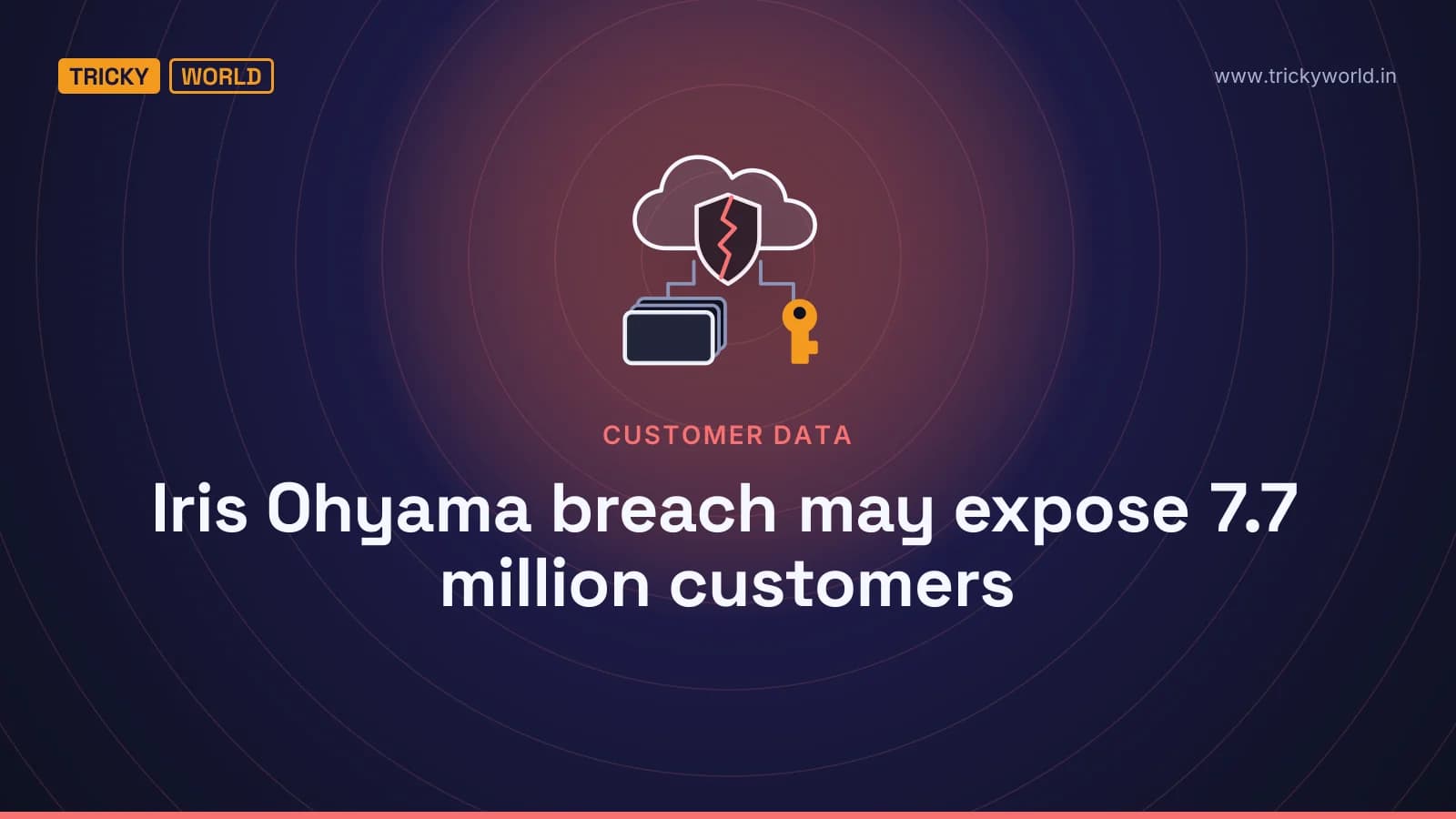
About 7.7 million people may have had personal information exposed in the Iris Ohyama breach through an external cloud service used by Iris Plaza, according to Iris Ohyama. The potentially exposed data includes contact details and account passwords, but the company is still investigating the final exposure count. For customers deciding which accounts need attention, the disclosed data categories are a better starting point than treating that headline number as a confirmed count.
According to BleepingComputer’s report on the Iris Plaza incident, current members, former members and non-member shoppers are all potentially affected. Closing an account, or never opening one, does not put someone outside the notice. Iris Plaza and related systems were suspended in response, so customers have faced a service interruption as well as the possibility that their records were exposed.
Iris Ohyama breach includes former members and guests
Iris Plaza puts the potential impact at up to 5.8 million registered and former members, plus 1.9 million non-members. Those figures describe the groups potentially involved. They are not a finished accounting of the incident: the company was still determining how many records were exposed and how many people were actually affected.
Confirmed unauthorized access does not establish how many people’s information was exposed. Unauthorized access to the external service is confirmed; exposure of every listed field for every person in those groups is not. Iris Plaza says the information potentially involved includes:
- Full names.
- Physical addresses.
- Phone numbers.
- Email addresses.
- Gender.
- Dates of birth.
- Account passwords.
The data types vary by individual, according to the company. In particular, a former member should not take the password entry in that list as confirmation that their password was stored in the affected service. Iris Plaza specifically says it does not store passwords for former members. The general list does not override that distinction.
This should not be described as a confirmed credit card leak, either. Iris Plaza says credit card information was not stored in the affected cloud service. That tells us something specific about what this storage location contained. It does not make the other customer information insignificant, or settle the questions about its possible exposure.
For someone checking their own position, the first question is straightforward: did they have an active account, close a former account or make a purchase without membership? The notice covers all three relationships with Iris Plaza. It does not say that each category, or each person within a category, had identical data exposed.
The shutdown covered more than Iris Plaza
The main shopping platform was not the only service interrupted. The company reported suspending its SIMPLE STYLE online store and related systems on October 28. Websites for Iris Tech Service Co., Ltd. services were also suspended. Those included home appliance subscriptions, along with furniture and appliance delivery and installation.
Iris Plaza’s reported dates separate three events that are easy to conflate: the shutdown, the first public notice and the later update about reports of misuse.
| Date | Reported milestone |
|---|---|
| October 28 | SIMPLE STYLE and related systems were suspended in response to the incident. |
| October 29 | The company issued its first notice confirming unauthorized third-party access. |
| November 5 | Iris Plaza said it had received no reports of misuse or financial loss tied to the incident. |
In a subsequent update, the company described finding a suspicious file in an external cloud service used by Iris Plaza. It said it suspended Iris Plaza and related systems and began investigating. That investigation confirmed unauthorized access to the service. Whether customer information had been accessed, and the potential extent of that access, remained under further assessment.
Review Iris Plaza accounts and reused passwords
Change passwords reused from an active Iris Plaza account on other services now as a proportionate precaution, without treating possible exposure as proven misuse. The checks below are recommendations for customers. They are not a password-reset procedure announced by Iris Plaza, and should not be read as instructions issued by the company.
Identify your customer category. Check whether you were an active member, a former member or a non-member shopper. Do not rule yourself out because you closed an account or bought something without registering. Former members and non-members both appear in the company’s potential-impact figures. Keep that distinction alongside any individual notice you receive; the general list of fields does not necessarily describe your exact record.
Review where else you used an active Iris Plaza password. If another service has the same password, change it through that service’s normal account controls. Choose a replacement that you do not share with other accounts. Passwords appear among the potentially exposed fields, which is the basis for this precaution. It is not evidence that an attacker has recovered your password or used it anywhere.
Treat unexpected account messages cautiously. If a message asks you to sign in, make a payment or provide more personal information, independently open the service you meant to use instead of taking the route supplied in the message. No phishing campaign has been identified here by this recommendation. This is simply a cautious way to handle those messages while the extent of your exposure is still uncertain.
Keep account recovery separate from store availability. The reporting describes service suspensions, but does not establish that every affected service has resumed. If your normal Iris Plaza account action is unavailable, do not improvise through an unsolicited support link. Reviewing other accounts where you reused the password does not depend on Iris Plaza being available; you can use those services’ own account controls.
There is no basis here for telling every former member to reset an Iris Plaza password because the company supposedly retained it. Iris Plaza says former-member passwords were not stored. That does not take former members out of the assessment altogether: their contact information and other personal details still need to be considered.
Audit what your cloud service can expose
For an engineering team, the useful question is what sits across the boundary between an application and the external service holding its customer data. The report places the confirmed unauthorized access in that external service. It neither identifies how the attacker entered nor establishes a failure in the shopping application itself. Those are limits on what the Iris Ohyama breach can tell another team.
I would use that distinction to organise a storage review, rather than try to guess the attacker’s technique. Start with the contents of your own external service. Then ask what your team could accurately tell customers if access to that service were called into question.
Match the stored fields to the customer groups they belong to. Where your system has active accounts, closed accounts and non-member purchases, review those as separate categories rather than treating every customer record alike. Record which groups retain contact details, birth dates or credentials. Ending a membership is not something to assume removes every other customer field; check what the service actually retains.
Document how retained credentials are protected in enough detail for your team to explain the protection. An internal inventory that merely says passwords are encrypted leaves a question unanswered. Ask the owner of that storage for the actual scheme and its configuration. Whether payment information is present in the same service is a separate check, and should stay separate in the review.
Customer categories and retained fields give a team concrete questions to investigate. They do not provide evidence of the route used to gain unauthorized access in this incident.
Encryption details leave password exposure unresolved
Iris Plaza says passwords for active registered members were stored in encrypted form. It did not identify the scheme. That is too little detail to assess the protection applied to those passwords, and I would not try to infer it from the label alone. Calling the passwords encrypted does not answer the technical question. Calling them plaintext would be equally unsupported.
The company was still determining how many records were exposed and how many people were impacted; those are related but distinct questions, and the report gives no final answer to either.
The November 5 statement is bounded by its date, too. Iris Plaza said it had received no reports of misuse or financial loss tied to the Iris Ohyama breach by then. That describes the reports the company said it had received. It does not guarantee that no misuse occurred, and it cannot serve as a current-status statement for every date after November 5.
The absence of credit card information from this service narrows the disclosed exposure. Names, addresses, birth dates and the other listed fields may still have been exposed; the payment-data statement does not erase that possibility. The limit works both ways, though. Nothing in the report justifies turning this into a confirmed payment-card compromise.
The report also establishes no cloud-provider identity, attack technique or confirmed restoration date. Without those details, technical diagnosis has limits. Assumptions about ransomware, stolen cloud credentials or a particular software flaw would fill the gaps with claims the report does not support.
Start with the passwords you reused elsewhere
My first priority would be to review reused active-member passwords, without losing sight of the broader personal-information exposure. That is a precaution worth taking on the information available here. It does not depend on assuming that every listed record was taken, or that someone recovered a password from its encrypted form.
Former members and non-member shoppers should not dismiss the notice, but neither should they treat their situation as identical to an active member’s retained-password exposure. Identify which relationship you had with Iris Plaza, then work through the account precautions that apply to it. Keep confirmed unauthorized access separate from the unfinished exposure assessment. If you reused an active-member password on another service, open that service’s normal account controls and change it there.
Frequently asked questions
Has an attacker demanded a ransom from Iris Plaza?
BleepingComputer asked about a possible ransom demand. An Iris Plaza spokesperson said the company had received no direct communications from the attacker and had not identified the perpetrators. The report does not establish that a ransom demand was made.
Did Iris Plaza report the incident to Japanese authorities?
Japan’s Personal Information Protection Commission and police were notified on October 29, 2026.
Sources
Primary sources
- Write-upEnterprise Email Security Assessment · adaptivesecurity.com
Reports of the story
- News reportIris Ohyama data cloud breach exposes info of 7.7 million customers · bleepingcomputer.com

About the author
Vishal · Software & security engineerVishal writes Trickyworld's tutorials and interview-preparation guides on programming, databases, cyber security and AI. Vishal has been shipping production software long enough to have firm opinions about Python, PHP, Node.js, and JavaScript, and to have been wrong about each of them at least once. The work has run the whole stack: Drupal and Laravel applications, React front ends, MySQL and MongoDB underneath, Redis and Memcached for the things that had to be fast, Apache Solr for the things that had to be findable. That last part turned out to matter more than anyone expected. Tune a Solr index for a season, then watch a language model confidently retrieve the wrong document, and you recognise an old problem wearing new clothes. Most of what is hard about AI systems is not the model. It is retrieval, caching, latency budgets, and deciding what the system does when the answer comes back wrong — which is work he has been doing since well before anyone called it AI engineering. He plays a lot of games, which is less a hobby disclosure than an admission of where a good share of his engineering instinct came from. Real-time systems with a frame budget. State that has to stay coherent while a player does something no designer anticipated. The permanent question of what happens when the frame cannot finish in time. Those habits carry over more directly than they have any right to. He has written several books on programming, all built on the same conviction: most technical writing is unclear because the author never decided what to leave out. More from Vishal → · Editorial policy