Bug bounty rewards: OpenAI offers up to $172,000
OpenAI's revised bug bounty program offers up to $172,000 with bonuses for exceptional critical vulnerabilities in ChatGPT, Codex, or the API Platform; standard critical awards top out at $30,000. New ranges apply to pending reports, while awards from the 30 days before the announcement qualify for differences based on base and loyalty awards, not all multipliers.
Summary written with AI from this article, and checked against it.

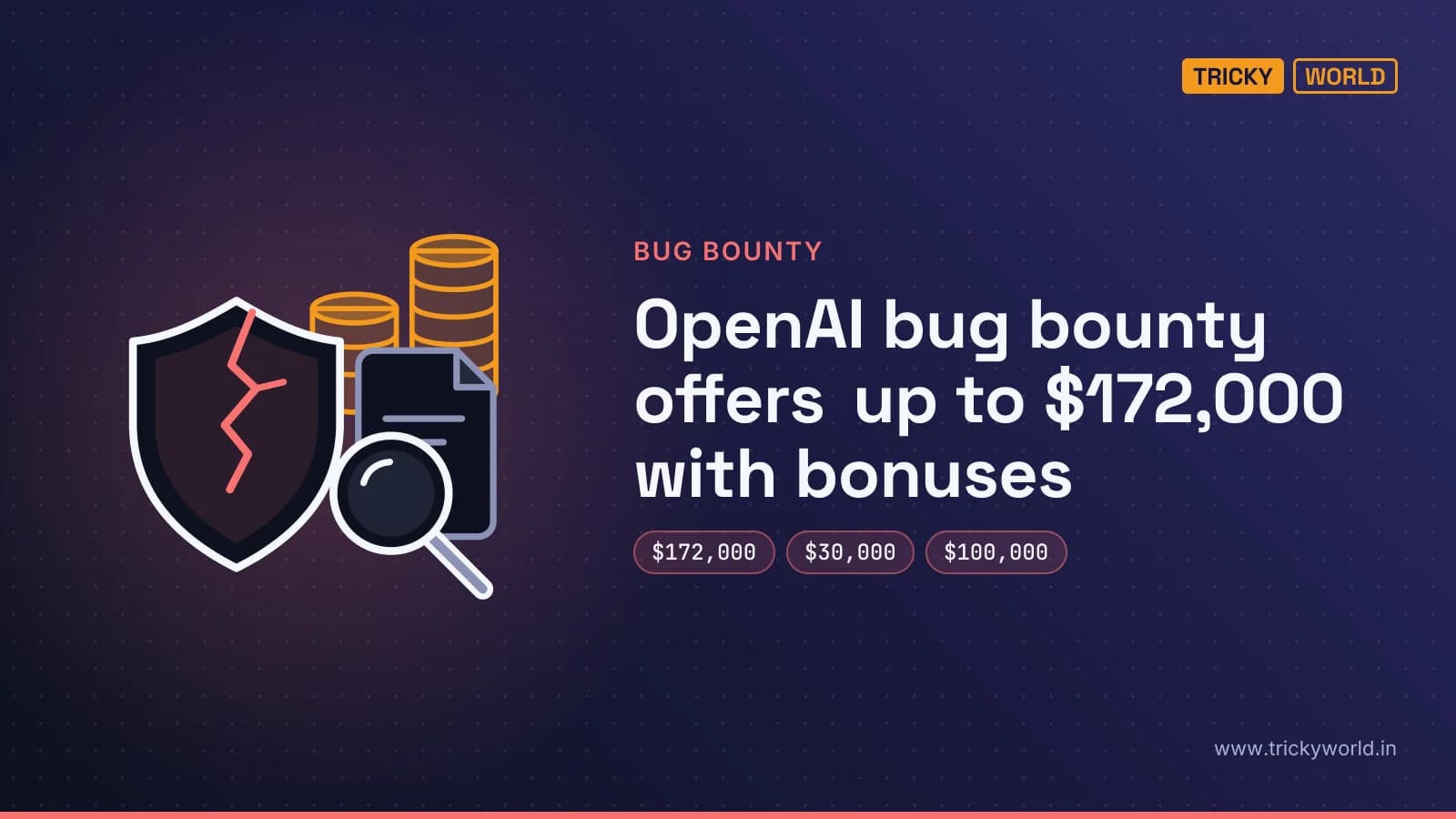
An exceptional critical vulnerability in ChatGPT, Codex, or the API Platform now pays up to $172,000 in bug bounty rewards with bonuses. The program combines higher base ranges with incentives for report quality, continued participation, and priority campaigns. You need to separate that headline ceiling from ordinary awards—and check whether an existing report qualifies for the revised rates.
For independent researchers, the change puts real money behind making a finding easier to reproduce and assess. OpenAI's announcement says a reliable proof of concept should isolate the bug, establish exploitation conditions, and demonstrate impact. Those details now help a report qualify for a multiplier, not just support the underlying finding. The original write-up on openai.com outlines the changes and points researchers to the full security bug bounty program for complete details.
How OpenAI's bug bounty rewards have changed
OpenAI says it has more than quadrupled the midpoints of its reward ranges for medium, high, and critical findings—on average. That's an average. It doesn't mean every submission sees the same increase.
A critical vulnerability in a core product—ChatGPT, Codex, or the API Platform—tops out at $30,000. Exceptional critical findings on those same targets still start at a base of up to $100,000, with bonuses pushing the advertised maximum to $172,000.
That largest figure is an exceptional award with bonuses, not the standard critical payout. A $30,000 critical finding and an exceptional security-boundary compromise are different propositions in OpenAI's own examples.
The additional incentives reward different things. Quality multipliers recognize useful reporting work. Loyalty bonuses recognize continued participation. Priority campaigns direct attention toward newly launched features through short-term campaigns with dedicated bonus pools. The announcement describes what those campaigns will offer; it doesn't name an active one or its dates.
How the illustrative payouts combine bonuses
OpenAI provides the following examples to show how base awards and multipliers can interact; every scenario and historical award in this table is illustrative.
| Illustrative finding | Historical award | New payout calculation | Published new reward |
|---|---|---|---|
| Medium, ChatGPT core asset: A read-only member uploads files to a Project without write permission. | $750 | $2,000 × 1.15 Quality Bonus × 1.05 Bronze Loyalty Tier Bonus | $2,415 |
| High, Prism non-core asset: IDOR allows a file uploaded to a user's Project to be read. | $1,000 | $2,500 × 1.15 Quality Bonus × 1.10 Gold Loyalty Tier Bonus | $3,162.50 |
| Critical, ChatGPT core asset: Account takeover through one click. | $6,500 | $30,000 × 1.15 Quality Bonus × 1.30 Priority Campaign Bonus × 1.15 31337 Loyalty Tier Bonus | $51,577 |
| Exceptional, ChatGPT core asset: Significant security-boundary compromise, such as viewing arbitrary users' chat messages. | $100,000 | $100,000 × 1.15 Quality × 1.30 Priority Campaign × 1.15 31337 loyalty | $171,925 |
Eligibility for a bonus isn't a guarantee of that bonus. The useful distinction is between a higher starting award and extra multipliers. In the exceptional example, the illustrated base stays at $100,000; the extra comes from bonuses. In other examples, the starting award itself rises before multipliers apply.
These aren't disclosures of actual incidents or payment records. The examples don't establish that every report qualifies for every multiplier. They explain the structure of the revised bug bounty rewards, not what a researcher should expect to earn.
The headline ceiling is less precise than the exceptional example: OpenAI advertises up to $172,000, but the displayed calculation yields $171,925. Treat the ceiling as the program's advertised maximum, not the exact result of that example.
Prepare an OpenAI report for the new bonuses
The most actionable change is the quality incentive: OpenAI explicitly values evidence that helps it understand and fix the flaw. Build the submission around reproducibility and demonstrated impact.
A practical preparation sequence:
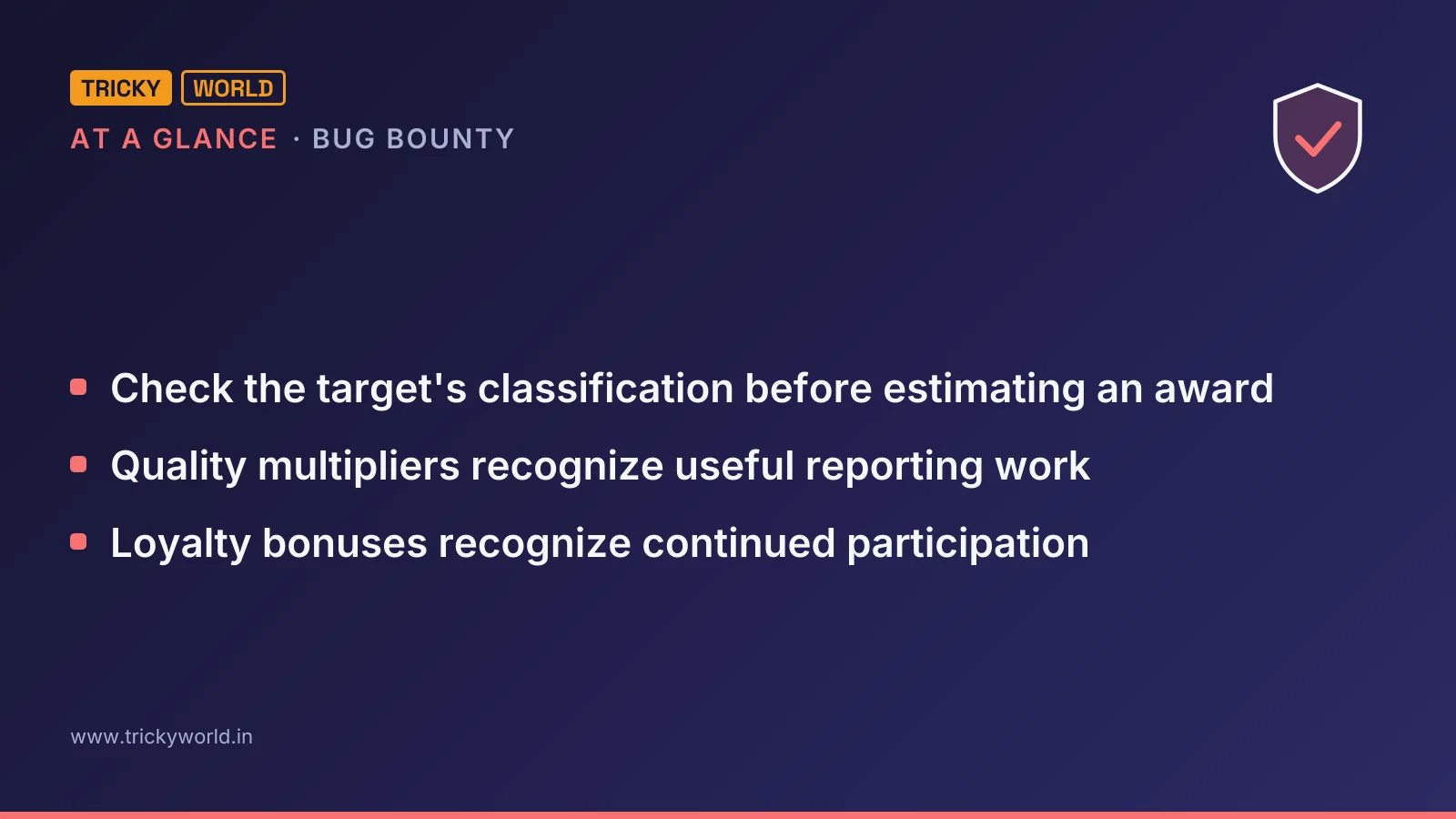
- Check the target's classification before estimating an award. OpenAI distinguishes core and non-core assets in its examples and points researchers to the full security bounty program for complete details. Confirm the relevant program terms rather than assuming that a ChatGPT example also establishes the rate for another target.
- Reduce the proof of concept to the behaviour that demonstrates the bug. OpenAI specifically values a reliable demonstration that isolates the vulnerability. Keep the explanation focused on what the report actually establishes.
- Document the exploitation conditions and the resulting impact. For a permission-related finding like the illustrative Project upload scenario, explain the permission the member has and the action that nevertheless succeeds. The aim is to make the boundary failure understandable, not merely to show an unexpected result.
- Check potential bonuses separately from the base award. Establish whether the report could qualify for a quality multiplier, which loyalty terms apply and whether a relevant priority campaign exists. Do not treat the combined multipliers in an example as automatic entitlements.
This sequence follows OpenAI's distinction between finding a weakness and producing a report that gives its engineers a head start on a fix. It also keeps the payout estimate tied to evidence: demonstrated impact belongs in the report before the hoped-for reward.
Which earlier reports get the higher rates?
Researchers with existing submissions have another reason to review the announcement: OpenAI is applying revised ranges to more than just new reports. The treatment depends on whether a bounty has already been awarded.
- For a submitted report that has not yet received a bounty award, OpenAI says it will apply the new reward ranges.
- For a bounty awarded during the 30 days before the announcement, OpenAI says it will pay the difference if the finding would have earned more under the new ranges, using the base award and loyalty awards.
The second rule is narrower than recalculating every recent award with every multiplier. OpenAI specifically names base and loyalty awards for that retrospective adjustment. It doesn't promise to add quality and priority campaign multipliers to already-awarded bounties.
That distinction determines which policy applies before any revised estimate.
The announcement text doesn't include a publication date, so the 30-day window can't be converted to calendar dates here. It's measured backward from the announcement, not from when you read this. For existing participants, that timing rule may be more useful than the maximum rewards advertised.
The announcement is not a complete payout schedule
The announcement explains the incentive structure but doesn't supply every reward range, loyalty threshold, or campaign condition. It points researchers to the full security bounty program for those. The example multipliers shouldn't be treated as a universal schedule for every target and submission.
OpenAI says high-quality reports will be eligible for a multiplier. The examples show possible combinations, but the announcement doesn't establish that any particular new report will receive them.
I wouldn't use the headline ceiling as a forecast of likely earnings. The practical case for participating is clearer when you have a finding on a relevant target, can demonstrate its impact, and can produce the reliable proof of concept OpenAI describes.
For developers using ChatGPT, Codex, or the API Platform without doing security research, this announcement contains no software update or configuration change to apply. It changes incentives for independent researchers to report weaknesses OpenAI's testing may have missed; it doesn't announce a named flaw has been fixed.
If you have a pending report with no bounty awarded, the new reward ranges apply regardless of when you submitted it. For an already-awarded bounty, check the award date against the announcement: the retrospective adjustment covers awards made in the preceding 30 days.
Frequently asked questions
How many tiers does OpenAI's loyalty bonus program have?
OpenAI describes a five-tier loyalty program with scaling bonuses for researchers who consistently contribute to the security of its technology.
Does independent research replace OpenAI's internal security testing?
No. OpenAI says responsible disclosure complements its internal work, where engineers use its models to find weaknesses, reproduce them and test fixes.
Source
- Write-upRewarding defenders with bigger bug bounties · openai.com

About the author
Vishal · Software & security engineerVishal writes Trickyworld's tutorials and interview-preparation guides on programming, databases, cyber security and AI. Vishal has been shipping production software long enough to have firm opinions about Python, PHP, Node.js, and JavaScript, and to have been wrong about each of them at least once. The work has run the whole stack: Drupal and Laravel applications, React front ends, MySQL and MongoDB underneath, Redis and Memcached for the things that had to be fast, Apache Solr for the things that had to be findable. That last part turned out to matter more than anyone expected. Tune a Solr index for a season, then watch a language model confidently retrieve the wrong document, and you recognise an old problem wearing new clothes. Most of what is hard about AI systems is not the model. It is retrieval, caching, latency budgets, and deciding what the system does when the answer comes back wrong — which is work he has been doing since well before anyone called it AI engineering. He plays a lot of games, which is less a hobby disclosure than an admission of where a good share of his engineering instinct came from. Real-time systems with a frame budget. State that has to stay coherent while a player does something no designer anticipated. The permanent question of what happens when the frame cannot finish in time. Those habits carry over more directly than they have any right to. He has written several books on programming, all built on the same conviction: most technical writing is unclear because the author never decided what to leave out. More from Vishal → · Editorial policy