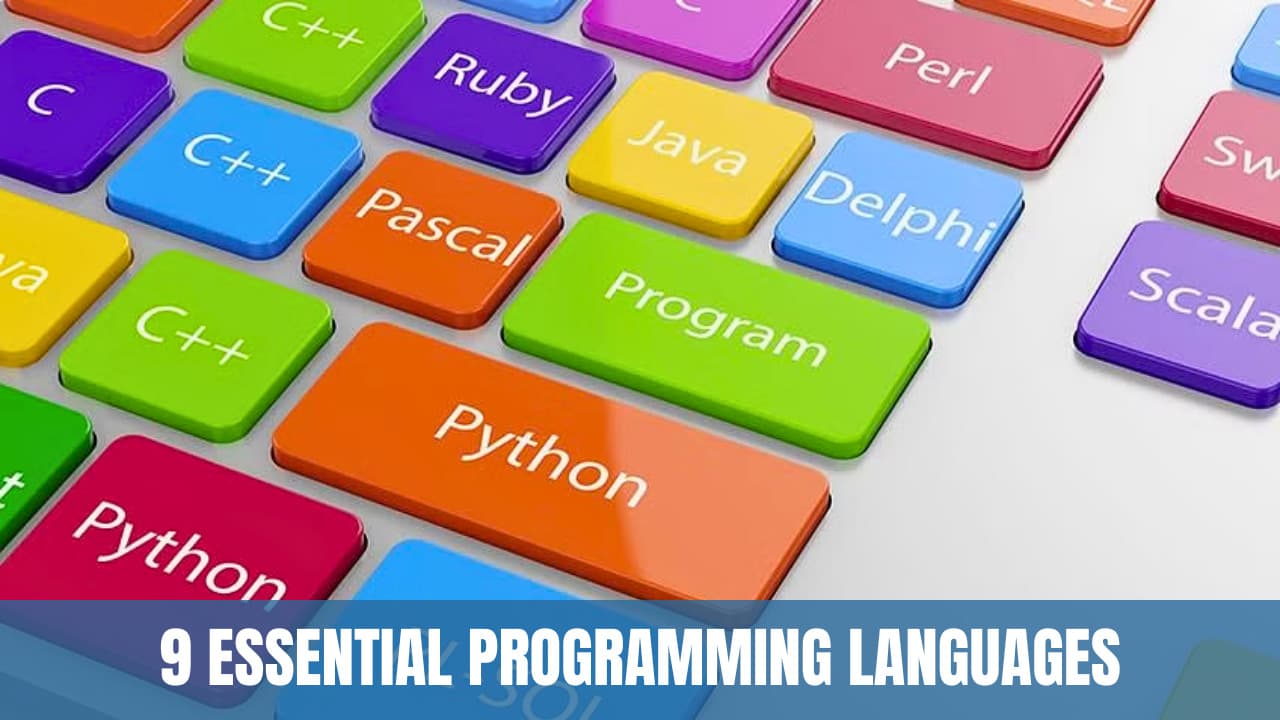
Programming Languages in Metaverse Development
Programming languages for metaverse development are chosen for performance, compatibility, interoperability and creativity. C++ supports real-time virtual environments, Java supports cross-platform applications, and Solidity enables smart contracts on Ethereum. No single language fits every project; the combination depends on project requirements.
Summary written with AI from this article, and checked against it.


In recent times, the concept of the metaverse has surfaced as a network of immersive virtual realms, accessible through a range of devices such as virtual reality (VR) and augmented reality (AR) headsets, smartphones, and computers. Projected as the next iteration of the internet, the metaverse promises more realistic and interactive engagements with digital content, encompassing various spheres such as entertainment, education, and socialization.
The groundwork of this digital revolution demands substantial inputs in software development, innovation, and engineering proficiency. Central to this development is the selection of appropriate programming languages, which stand as instrumental tools enabling developers to craft computer-executable instructions. This blog post endeavors to elucidate the factors that dictate the choice of programming languages in metaverse development, shedding light on their performance, compatibility, interoperability, and the scope for creativity.
Performance
To foster a metaverse environment that stands up to the expectation of real-time, efficient functionality, incorporating high-performance languages becomes imperative. These languages are adept at managing large volumes of data and complex graphic renderings without conceding speed or quality. Let's delve deeper into a few programming languages that align with this criteria:
C++
Widely acknowledged for its high-performance metrics, C++ is a language that is extensively utilized in applications where real-time performance is a priority. It allows developers to have a granular level of control over system resources and memory, making it a preferred choice for developing intricate virtual environments.
Rust
Rust emerges as another powerful language characterized by memory safety without a garbage collector, thereby ensuring efficient performance. Its syntax is somewhat analogous to C++, making it a viable option for developers familiar with the latter.
Golang
Known alternatively as Go, this language, developed by Google, offers both ease of understanding and usage, even for novices in the programming domain. Its static typing and efficiency in handling multicore processes make it a favorable choice for backend development in the metaverse.
Compatibility
Creating a metaverse that harmonizes with diverse platforms and devices is a pivotal aspect of its development. This section explores programming languages that are well-suited for crafting cross-platform experiences:
Java
As a veteran in the programming sphere, Java offers the benefit of platform independence, meaning the programs written in Java can run seamlessly across various operating systems. This feature amplifies its viability in the context of metaverse development, where compatibility is a vital attribute.
JavaScript
JavaScript stands as a staple in web development, fostering dynamic and interactive elements on web pages. Its compatibility with browsers and its role in developing responsive web-based virtual environments make it an essential tool in the metaverse toolkit.
Python
Python's simplicity and readability, coupled with its extensive library support, position it as a favorable choice for developing applications across diverse platforms, including web servers and desktop applications.
Interoperability
Interoperability, which facilitates seamless communication and integration with various standards and protocols, is another crucial aspect in metaverse development. Below, we explore languages that excel in this dimension:
Solidity
Solidity serves as the cornerstone for developing decentralized applications on the Ethereum blockchain. Its prominence in crafting smart contracts positions it as a pivotal tool in integrating blockchain technologies within the metaverse.
C#
A versatile language, C# supports the development of a wide array of applications, with features facilitating interoperability with various technologies, thereby serving as a conduit in connecting different elements within the metaverse framework.
Vyper
As a Python-derived language, Vyper is designed to be more secure and simpler than Solidity, making it another viable option for developing smart contracts and integrating blockchain protocols in the metaverse.
Creativity
The metaverse is a canvas for boundless creativity and innovation. To realize unique user experiences, developers require languages that foster creativity:
Lua
Lua, with its lightweight and embeddable attributes, serves as an efficient scripting language for developing interactive content, especially in the gaming sector, which is a significant component of the metaverse.
Ruby
Ruby, known for its elegance and simplicity, promotes creativity by allowing developers to craft solutions with fewer lines of code, thereby fostering innovative approaches in metaverse development.
Swift
Swift, developed by Apple, offers a robust and intuitive environment for crafting applications with rich user interfaces, playing a significant role in designing innovative experiences in the metaverse.
Conclusion
In essence, the metaverse development landscape necessitates a multi-faceted approach to the selection of programming languages. It is a confluence where performance meets creativity, facilitated by languages that offer compatibility and interoperability. As developers venture into crafting immersive virtual worlds, a judicious choice of programming languages emerges as a cornerstone, enabling the realization of the envisioned benefits and opportunities of the metaverse. It is pertinent to note that there isn't a universal solution, and a thoughtful amalgamation of different languages, aligned with project specifics, will pave the way for a successful venture into the metaverse realm.

About the author
Vishal · Software & security engineerVishal writes Trickyworld's tutorials and interview-preparation guides on programming, databases, cyber security and AI. Vishal has been shipping production software long enough to have firm opinions about Python, PHP, Node.js, and JavaScript, and to have been wrong about each of them at least once. The work has run the whole stack: Drupal and Laravel applications, React front ends, MySQL and MongoDB underneath, Redis and Memcached for the things that had to be fast, Apache Solr for the things that had to be findable. That last part turned out to matter more than anyone expected. Tune a Solr index for a season, then watch a language model confidently retrieve the wrong document, and you recognise an old problem wearing new clothes. Most of what is hard about AI systems is not the model. It is retrieval, caching, latency budgets, and deciding what the system does when the answer comes back wrong — which is work he has been doing since well before anyone called it AI engineering. He plays a lot of games, which is less a hobby disclosure than an admission of where a good share of his engineering instinct came from. Real-time systems with a frame budget. State that has to stay coherent while a player does something no designer anticipated. The permanent question of what happens when the frame cannot finish in time. Those habits carry over more directly than they have any right to. He has written several books on programming, all built on the same conviction: most technical writing is unclear because the author never decided what to leave out. More from Vishal → · Editorial policy