
Nuclei Vulnerability Scanner: Web Application Security Risks
An exhaustive examination of how the Nuclei Vulnerability Scanner is used to exploit web application vulnerabilities, featuring a real-world example and mitigation strategies.

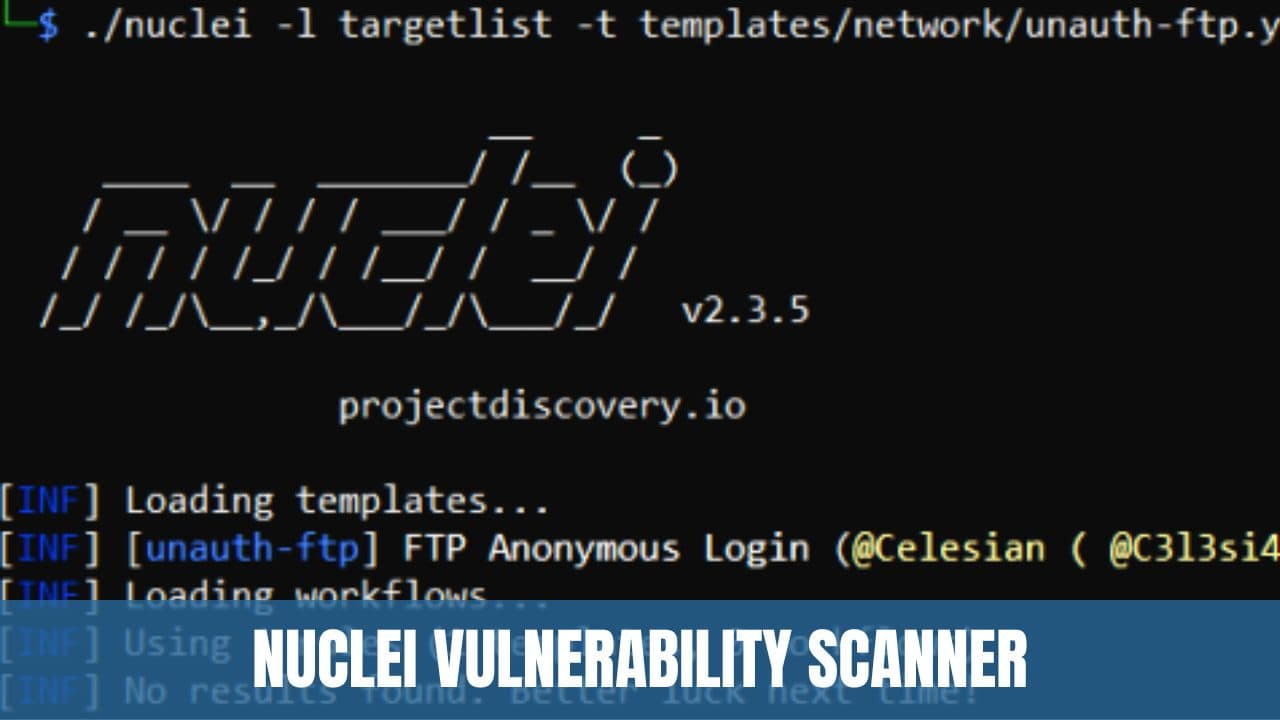
The landscape of web application security has never been more volatile. As web technologies advance, so do the methods of exploiting them. One such tool designed to identify vulnerabilities in web applications is the Nuclei Vulnerability Scanner. This article aims to provide a comprehensive analysis of how Nuclei is used to exploit web application vulnerabilities.
What is the Nuclei Vulnerability Scanner?
Definition
Nuclei is an open-source vulnerability scanner explicitly tailored for web applications. It is designed to perform automated scans that identify potential security flaws within a web application's infrastructure.
Functionality
Nuclei can scan for various vulnerabilities such as SQL injection, Cross-Site Scripting (XSS), and Cross-Site Request Forgery (CSRF), among others. It is a go-to tool for ethical hackers and cybersecurity professionals for its robustness and reliability.
Exploiting Web Application Vulnerabilities
Common Vulnerabilities
The most common vulnerabilities Nuclei scans for include, but are not limited to, SQL injections and XSS. These vulnerabilities can lead to unauthorized data access and can compromise the integrity of a web application.
How Nuclei Works
Nuclei uses pre-defined templates that contain patterns of known vulnerabilities. The scanner then combs through the web application's code, searching for matches. When a match is found, Nuclei alerts the user.
Real-world Example: E-commerce Website
In a practical scenario, an e-commerce website was found to have multiple vulnerabilities using the Nuclei Vulnerability Scanner. It revealed that the site was susceptible to SQL injection, allowing for unauthorized access to customer databases.
Mitigation and Prevention
Immediate Response
Upon detection, immediate measures include patching the detected vulnerabilities and performing a secondary scan to confirm the elimination of the security flaws.
Long-term Solutions
In the long run, it is advisable to integrate Nuclei as part of a continuous integration and continuous deployment (CI/CD) pipeline for constant security monitoring.
Conclusion
The Nuclei Vulnerability Scanner plays a crucial role in identifying and exploiting vulnerabilities in web applications. Proper understanding and utilization of this tool can significantly fortify an application's security posture.

Vishal writes Trickyworld's tutorials and interview-preparation guides on programming, databases, cyber security and AI. Vishal has been shipping production software long enough to have firm opinions about Python, PHP, Node.js, and JavaScript, and to have been wrong about each of them at least once. The work has run the whole stack: Drupal and Laravel applications, React front ends, MySQL and MongoDB underneath, Redis and Memcached for the things that had to be fast, Apache Solr for the things that had to be findable. That last part turned out to matter more than anyone expected. Tune a Solr index for a season, then watch a language model confidently retrieve the wrong document, and you recognise an old problem wearing new clothes. Most of what is hard about AI systems is not the model. It is retrieval, caching, latency budgets, and deciding what the system does when the answer comes back wrong — which is work he has been doing since well before anyone called it AI engineering. He plays a lot of games, which is less a hobby disclosure than an admission of where a good share of his engineering instinct came from. Real-time systems with a frame budget. State that has to stay coherent while a player does something no designer anticipated. The permanent question of what happens when the frame cannot finish in time. Those habits carry over more directly than they have any right to. He has written several books on programming, all built on the same conviction: most technical writing is unclear because the author never decided what to leave out. More from Vishal → · Editorial policy