Leadership and Teamwork Scenarios: A Guide to Assessing Your Abilities
Prepare for questions that evaluate your leadership, collaboration, and teamwork abilities. This guide offers insights on identifying key qualities, structuring responses, and practicing with real scenarios to articulate your skills effectively.

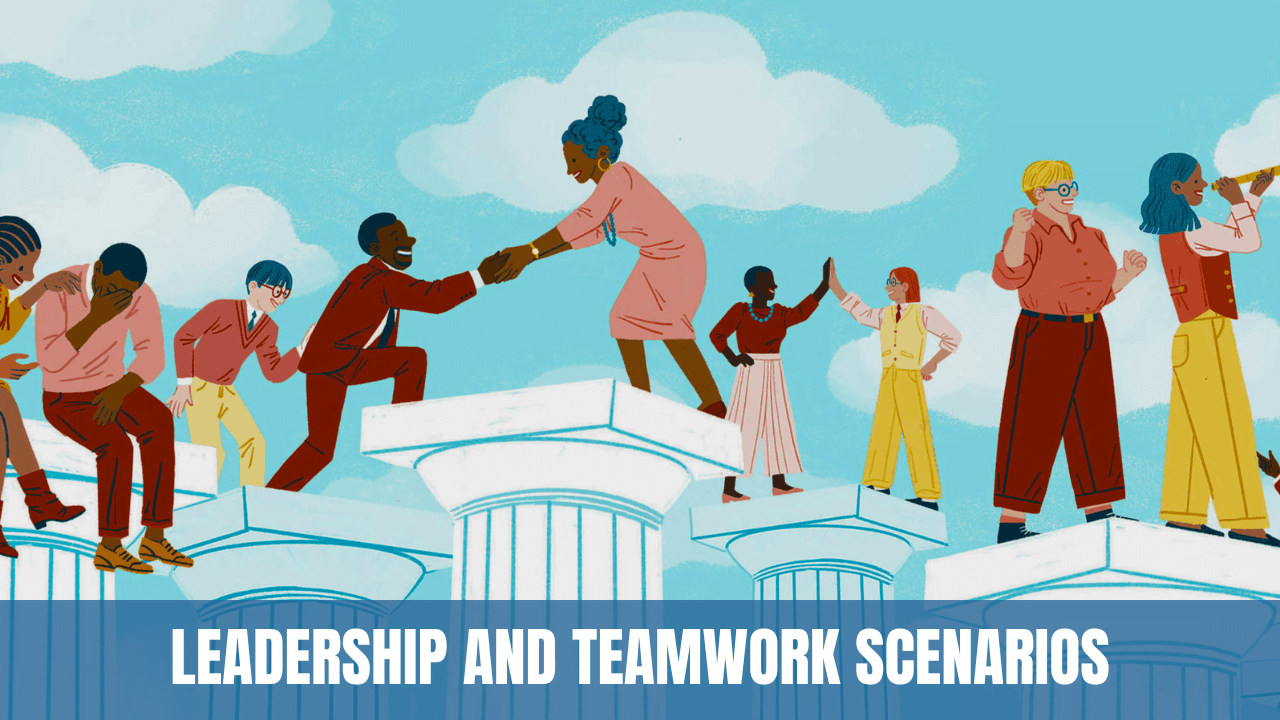
Leadership and teamwork are essential skills sought by employers across various industries. Whether you're going for an interview, leading a team, or working on personal development, understanding how to articulate your leadership and teamwork abilities is key. This article provides guidance on preparing for questions or scenarios that assess these critical skills.
Understanding Leadership and Teamwork
Leadership: It involves inspiring, guiding, and motivating others to achieve a shared goal. Key aspects include decision-making, conflict resolution, and strategic thinking.
Teamwork: This focuses on collaboration and the ability to work effectively with others. Key aspects include communication, adaptability, and mutual respect.
Preparing for Leadership Scenarios
- Identify Key Leadership Qualities:
- Consider qualities like vision, integrity, empathy, and resilience.
- Reflect on how you have demonstrated these qualities in the past.
- Utilize the STAR Method:
- Outline the Situation, Task, Action, and Result to structure your response.
- Practice with scenarios that demonstrate your leadership abilities.
- Consider Potential Questions:
- Example: "Describe a time when you had to lead a team through a challenging situation. How did you handle it?"
Preparing for Teamwork Scenarios
- Identify Key Teamwork Qualities:
- Consider qualities like cooperation, active listening, and problem-solving.
- Reflect on how you have worked effectively in a team setting.
- Utilize the STAR Method:
- Similar to leadership scenarios, use this method to structure your response.
- Practice with scenarios that demonstrate your teamwork abilities.
- Consider Potential Questions:
- Example: "Tell me about a time when you had to work closely with a colleague who was very different from you. How did you handle it?"
Example Scenarios and Responses
- Leadership Scenario: Leading a project with a tight deadline.
- Response: Share how you set clear goals, organized the team, managed time effectively, and achieved success.
- Teamwork Scenario: Collaborating on a project with conflicting ideas.
- Response: Detail how you facilitated open communication, found common ground, and created a successful collaboration.
Tips for Success
- Be Honest: Share real experiences; authenticity resonates more.
- Stay Relevant: Focus on experiences that align with the job role or context.
- Practice: Consider practicing with a mentor or friend to get feedback.
Conclusion
Leadership and teamwork scenarios are common in various professional contexts and require thoughtful preparation. By identifying key qualities, utilizing the STAR method, and practicing with real scenarios, you can effectively articulate your leadership and teamwork abilities. Remember, these skills are not just about titles or roles but about how you interact with others and contribute to a common goal. Whether you're a seasoned leader or an aspiring team player, understanding how to convey these skills is vital for professional growth and success.

Vishal writes Trickyworld's tutorials and interview-preparation guides on programming, databases, cyber security and AI. Vishal has been shipping production software long enough to have firm opinions about Python, PHP, Node.js, and JavaScript, and to have been wrong about each of them at least once. The work has run the whole stack: Drupal and Laravel applications, React front ends, MySQL and MongoDB underneath, Redis and Memcached for the things that had to be fast, Apache Solr for the things that had to be findable. That last part turned out to matter more than anyone expected. Tune a Solr index for a season, then watch a language model confidently retrieve the wrong document, and you recognise an old problem wearing new clothes. Most of what is hard about AI systems is not the model. It is retrieval, caching, latency budgets, and deciding what the system does when the answer comes back wrong — which is work he has been doing since well before anyone called it AI engineering. He plays a lot of games, which is less a hobby disclosure than an admission of where a good share of his engineering instinct came from. Real-time systems with a frame budget. State that has to stay coherent while a player does something no designer anticipated. The permanent question of what happens when the frame cannot finish in time. Those habits carry over more directly than they have any right to. He has written several books on programming, all built on the same conviction: most technical writing is unclear because the author never decided what to leave out. More from Vishal → · Editorial policy