EleKtra-Leak Uses Exposed AWS Credentials for Cryptojacking
EleKtra-Leak exploits AWS IAM credentials exposed in public GitHub repositories to launch AWS EC2 instances for Monero cryptojacking. Organizations should immediately revoke exposed credentials, remove them from GitHub repositories and generate new credentials, then use short-lived credentials and the AWSCompromisedKeyQuarantineV2 policy.
Summary written with AI from this article, and checked against it.


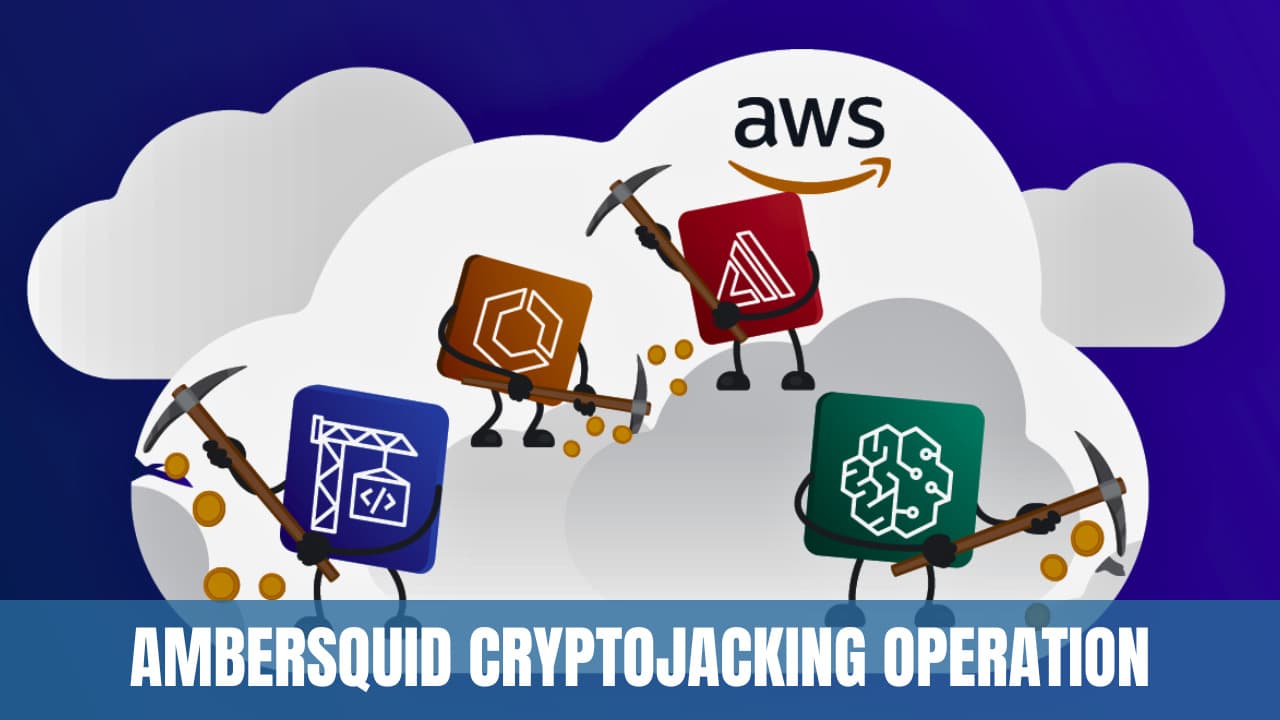
The EleKtra-Leak operation, identified by Unit 42 researchers, highlights a significant cybersecurity threat where threat actors systematically search for publicly exposed AWS IAM credentials on GitHub repositories. These credentials are then exploited to launch AWS Elastic Compute Cloud (EC2) instances for persistent cryptojacking activities.
Technical Insights into EleKtra-Leak
Methodology
- Credential Hunting: Automated tools clone public GitHub code repositories, searching for exposed AWS IAM credentials.
- Exploitation: These credentials are used to create multiple AWS EC2 instances.
- Mining Operations: Researchers identified 474 miners within these instances, receiving configurations for Monero mining.
Operational Tactics
- VPN Usage: The threat actors utilize VPNs to conceal their identity, executing operations across various regions.
- Rapid Deployment: In a span of seven minutes, over 400 API calls are made, showcasing the actors' ability to maintain anonymity while conducting automated attacks.
Countermeasures
- Blocking Exposed AWS Accounts: The actors block accounts that continuously expose IAM credentials, likely to avoid detection by security researchers.
Recommendations for Organizations
- Revoke Exposed Credentials: Immediately revoke any exposed AWS IAM credentials to prevent unauthorized access.
- Remove Credentials from GitHub: Diligently remove exposed credentials from GitHub repositories and generate new credentials for intended functionalities.
- Implement Short-Lived Credentials: Use short-lived credentials for dynamic operations in production environments to enhance security.
- Enforce AWS Quarantine Policy: Establish the AWSCompromisedKeyQuarantineV2 policy to prevent exploitation of cloud data and resources.
- Leverage GitHub Audit Features: Utilize auditing features in GitHub Enterprise accounts to monitor clone events and detect malicious activities.
- Deploy EDR Solutions: Use Endpoint Detection and Response tools for proactive detection and mitigation of threats like cryptojacking.
Conclusion
The EleKtra-Leak operation serves as a stark reminder of the risks associated with exposed cloud credentials. Organizations must adopt stringent security measures, including regular credential audits, implementing sophisticated detection tools, and educating staff on best security practices to safeguard against such sophisticated cyber threats.
In today's digital landscape, where cloud services are integral to operations, the protection of credentials is paramount. The EleKtra-Leak campaign underscores the need for robust security protocols and continuous vigilance to defend against evolving cyber threats such as cryptojacking.
Interview flashcards
How does EleKtra-Leak obtain credentials and use them for cryptojacking?
Automated tools clone public GitHub repositories and search for exposed AWS IAM credentials. The actors use those credentials to launch multiple AWS Elastic Compute Cloud (EC2) instances for persistent cryptojacking.
What mining activity did researchers identify in EleKtra-Leak's EC2 instances?
Researchers identified 474 miners within the EC2 instances. These miners received configurations for Monero mining.
How does EleKtra-Leak conceal its operators' identities?
The threat actors use VPNs to conceal their identity while executing operations across various regions.
How quickly does EleKtra-Leak deploy its automated attacks?
The actors make over 400 API calls in a span of seven minutes, demonstrating rapid deployment of automated attacks.
Why does EleKtra-Leak block AWS accounts that repeatedly expose IAM credentials?
The actors block accounts that continuously expose IAM credentials, likely to avoid detection by security researchers.
What should organizations do when AWS IAM credentials are exposed on GitHub?
Organizations should immediately revoke the exposed AWS IAM credentials to prevent unauthorized access. They should remove the credentials from GitHub repositories and generate new credentials for intended functionalities.
Which AWS policy is recommended to prevent exploitation of cloud data and resources?
The AWSCompromisedKeyQuarantineV2 policy is recommended to prevent exploitation of cloud data and resources.
How can GitHub Enterprise auditing help detect malicious activity targeting repositories?
GitHub Enterprise auditing features can monitor clone events and help detect malicious activities.
Written with AI from this article, and checked against it.

About the author
Vishal · Software & security engineerVishal writes Trickyworld's tutorials and interview-preparation guides on programming, databases, cyber security and AI. Vishal has been shipping production software long enough to have firm opinions about Python, PHP, Node.js, and JavaScript, and to have been wrong about each of them at least once. The work has run the whole stack: Drupal and Laravel applications, React front ends, MySQL and MongoDB underneath, Redis and Memcached for the things that had to be fast, Apache Solr for the things that had to be findable. That last part turned out to matter more than anyone expected. Tune a Solr index for a season, then watch a language model confidently retrieve the wrong document, and you recognise an old problem wearing new clothes. Most of what is hard about AI systems is not the model. It is retrieval, caching, latency budgets, and deciding what the system does when the answer comes back wrong — which is work he has been doing since well before anyone called it AI engineering. He plays a lot of games, which is less a hobby disclosure than an admission of where a good share of his engineering instinct came from. Real-time systems with a frame budget. State that has to stay coherent while a player does something no designer anticipated. The permanent question of what happens when the frame cannot finish in time. Those habits carry over more directly than they have any right to. He has written several books on programming, all built on the same conviction: most technical writing is unclear because the author never decided what to leave out. More from Vishal → · Editorial policy